
Service
Concrete Flatwork
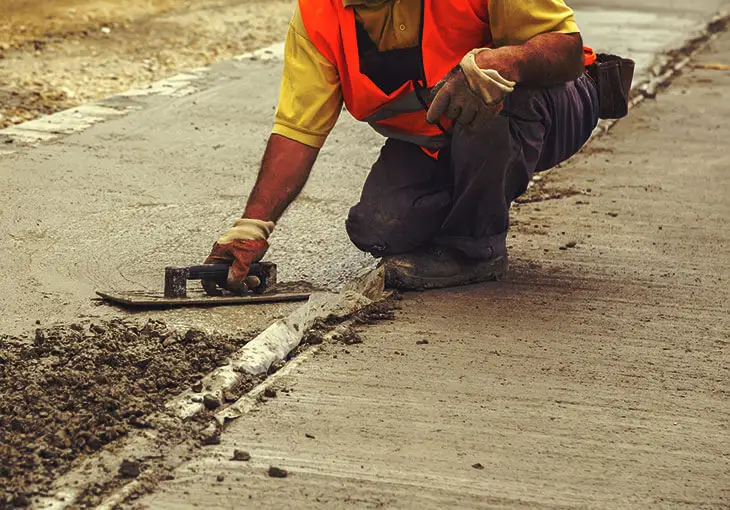
Sidewalks, walkways, pads, and slabs — poured, finished, and jointed to last.
Concrete goes where asphalt cannot: anywhere subject to standing loads, turning truck traffic, or fuel and hydraulic spillage. Dumpster pads are the classic example — asphalt deforms under a loaded container and dissolves under hydraulic fluid.
Most premature flatwork failure comes down to jointing and subgrade. Concrete will crack; control joints determine whether it cracks where you decided or where it decided. We joint to the slab thickness and the geometry of the pour.
Common questions
When is it too cold to pour concrete?
Around 55°F is the ideal pouring temperature. As temperatures fall the curing process slows substantially, and concrete cured in cold conditions ends up weaker and more prone to cracking. Below the threshold, curing blankets, heated enclosures or admixtures become necessary — which is a scheduling and cost consideration at our Denver, Cleveland and Lynchburg locations more than in Florida.
Why does new concrete crack?
All concrete cracks. Control joints determine whether it cracks where you decided or where it decided. Most premature flatwork failure comes down to jointing and subgrade preparation rather than the concrete itself.
Request received
Thanks — we've got it. One of our estimators will be in touch within one business day. If it's urgent, call 954-210-7481.
Want a number you can put in a budget?
We will assess the property and send a written scope and price. No obligation.